
Crowded hotel elevators, standard beige rooms, and rigid 11 AM checkout times are causing traveler burnout. For decades, a stay in a hotel was the default choice for vacationers. Whether planning a weekend city break, a family getaway, or a cross-country adventure, the assumption was simple: find a hotel, book a room, then plan the trip around it. Travelers no longer want a generic room; they want an immersive “home base” that tells a story. Enter the new solution with this ultimate guide to alternative stays.
These days, travelers are increasingly doing just the opposite. Rather than choosing a destination and then looking for the nearest hotel, many people are seeking out experiences that simply don’t fit within the traditional model. From RV adventures and lakeside cabins to converted barns and tiny homes, the accommodation itself can become part of the attraction.
It raises an interesting question: do you really need a hotel stay for it to be a real, memorable holiday? If the answer is no hotel, no problem, then read on for our ultimate guide to alternative stays.
No Hotel, No Problem: Ultimate Guide to Alternative Stays
Table of Contents
There is a distinct moment of friction that almost every modern traveler knows too well: standing in a crowded hotel lobby at 4 PM, waiting for a key card, listening to the ambient hum of ice machines, and realizing your “escape” looks exactly like every other corporate suite in the country. In 2026, the traditional hotel stay is facing a quiet reckoning. Crowded elevators, standard beige drywall, and rigid checkout times are no longer viewed as luxury—they are viewed as a “logistics tax” on your mental fuel.
A massive cultural shift is underway. Travelers are actively moving away from generic check-ins and embracing experiential autonomy. Skipping the traditional hotel is no longer a budget-driven compromise; it is a strategic choice to reclaim your privacy, your schedule, and your nervous system regulation. Welcome to the era of “Hushpitality”—where the ultimate travel status symbol isn’t a loyalty point balance, but a private, high-fidelity sanctuary booked entirely on your own terms.
The Best Travel Stories Rarely Happen in a Hotel Lobby
There’s nothing wrong with a good hotel. Comfortable beds, convenient locations, and helpful staff all make a holiday more joyful. But when people share their standout travel memories, they are often referring to something less predictable. It could be a camper parked by a beach, a mountain cabin reached via a winding road, or a week spent sleeping under the stars in a tent or a home-on-wheels. The best memories rarely begin with “so I was waiting on the banquette seating in the hotel lobby when…”
Experiences like the above create a different relationship with a destination. It’s closer, more personal. Instead of a visitor transiently passing through, you’re a part of the landscape, even if only for a short time. The accommodation becomes part of the story, rather than simply a place to return to at night.
Cultivating “Hushpitality”: The Rise of Architectural Stays

The modern traveler no longer wants to view a destination through a generic window pane; they want the accommodation itself to be a central character in their travel narrative. This desire has fueled the rise of architectural micro-sanctuaries and meticulously converted spaces that prioritize solitude and design over mass-tourism amenities.
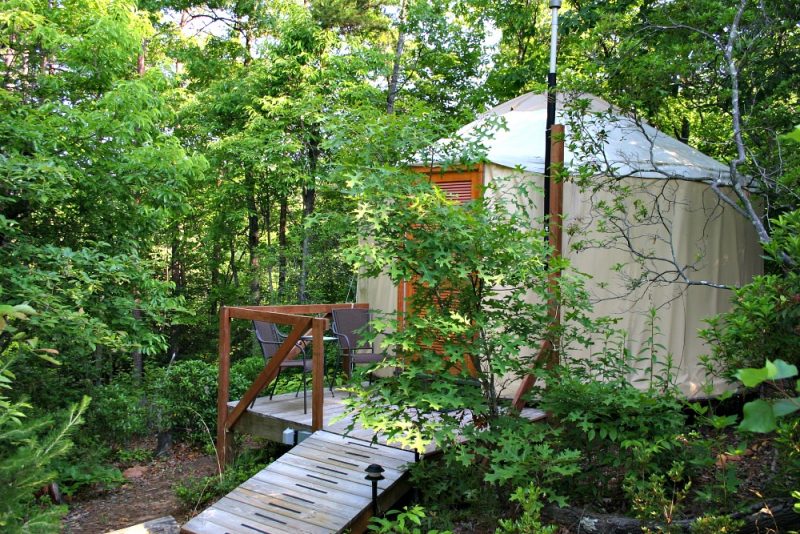
Across the globe, historic structures—from 17th-century stone barns and high-alpine fire lookouts to rock-hewn cave dwellings—are being retrofitted with premium interior finishes. Simultaneously, architectural geometric pods and mirrored cabins are being intentionally placed in remote landscapes, designed to reflect the surrounding wilderness while disappearing completely into it.
The luxury of these alternative spaces lies in their commitment to visual minimalism and acoustic isolation. With zero shared walls, no overhead footsteps, and no hallway chatter, your brain can finally drop its guard. These spaces serve as custom-engineered environments for cognitive flexibility, allowing you to decompress without the background static of a high-density resort.
Comfort Doesn’t Have to Mean Conventional
One reason so many people hesitate to move beyond hotels is the assumption that such temporary housing sacrifices comfort. And they think this, no doubt, because it used to be true in many cases. But modern travel has changed dramatically, and a stay in an RV can offer surprisingly stylish interiors, comfortable sleeping arrangements, and many of the conveniences you would expect at a hotel or B&B.
Likewise, short-term rentals and unique stays often offer features that hotels cannot, from private outdoor spaces and full kitchens to room to spread out. The choice is no longer between comfort and adventure. Increasingly, it is possible to enjoy both.
Alternative Accommodation Cheat Sheet

To help you choose the right style of hotel alternative for your next escape, use this matrix to match your specific travel goals to the right structure:
| Accommodation Type | Best For | Key Lifestyle Benefit |
| Converted Heritage Stays | Cultural immersion, design enthusiasts | Deep connection to regional history with high-end architectural updates. |
| Architectural Micro-Cabins | Solo travelers, couples, deep digital detox | Visual minimalism that reduces cognitive load; hidden in remote landscapes. |
| Luxury Glamping Sites | Nature seekers wanting zero setup friction | Immediate wilderness access paired with high-thread-count bedding and wood stoves. |
| Private Rural Estates | Families, multi-generational “Playcations” | Full kitchen access, zero shared walls, and dedicated space for custom routines. |
Travel on Your Own Terms

The quality of a trip is no longer measured by a hotel chain’s star rating, but by the depth of the reset you achieve while you are away. By stepping off the beaten path of high-density hospitality, you strip away the institutional rules and hidden stressors that convert vacations into hard work.
Whether you find yourself inside a striking glass cabin hidden in a pine valley, a historic stone carriage house, or a perfectly leveled adventure van overlooking a wild river, alternative accommodations offer something a corporate hotel suite can never buy: a space that feels entirely, unapologetically your own. It’s time to close out the booking apps, bypass the concierge desk, and reclaim your vacation freedom on your own terms.